
Last updated October 30, 2026
 House lockouts
 Re-keying
 Deadbolt upgrades
 Smart locks
 Schlage
 Kwikset
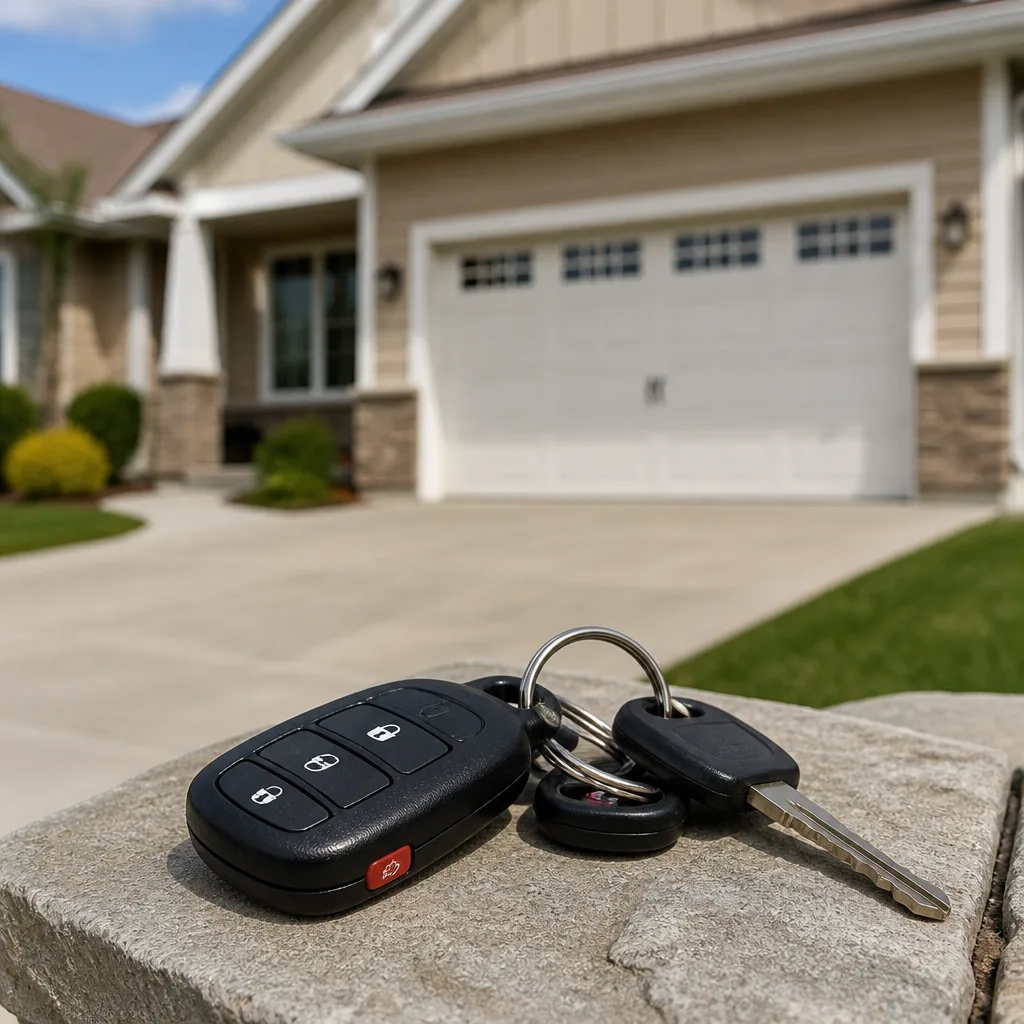 Car keys & fobs
Non-destructive entry first, always - and we re-key Schlage, Kwikset, and Baldwin locks on the spot while you watch
You get a price before we start. It does not change when we arrive. No surprises.
Get your free estimateCar Key Replacement Troubleshooting: Common Problems and How to Fix Them
Here’s a scenario we see at least once a week in Oakland: a customer drives to a big-box hardware store or a kiosk, pays forty or fifty dollars for a “replacement” car key, and walks back to their vehicle confident the problem is solved. The key slides into the ignition. It turns. And then nothing happens. No crank, no start, just a dashboard blinking back at them. Or the opposite: the key starts the car fine, but the remote buttons are completely dead, so they’re locking their doors manually like it’s 1993. Most people assume the key is defective. In our experience, it isn’t. It’s an incomplete job. One step of three was done right, and nobody told the driver which one failed. This guide, alongside our Complete Car Key Replacement Guide for Oakland Homeowners, teaches you that diagnostic skill, so you’ll know whether to demand a recut, a reprogram, or a resync before anyone charges you a second time.
Styles & brands we work with
Quick Answer
Car Key Replacement services address problems that fall into one of three categories: the key won’t insert (cutting error), the key turns but won’t start the car (transponder programming failure), or the key starts the car but remote functions don’t work (fob sync failure). Each has a distinct cause, a distinct test, and a distinct fix, and identifying which one you’re dealing with prevents paying twice for the same incomplete job.
Table of Contents
- The Three-Step Diagnostic Matrix
- Key Won’t Insert: Cutting Errors and What Causes Them
- Key Turns but Car Won’t Start: Transponder Programming Failures
- Key Starts Car but Remote Functions Are Dead: Fob Sync Issues
- The Security Light: Your Most Reliable Diagnostic Signal
- How to Test Whether a Transponder Chip Exists Before Blaming Programming
- The Battery-Reset Trick for Fob Sync Failures
- What to Have Ready Before Calling a Locksmith
- Common Mistakes to Avoid
- When to Call a Professional
- Frequently Asked Questions
- The Bottom Line
The Three-Step Diagnostic Matrix
Every car key replacement involves three independent steps, and they fail independently. Understanding this is the whole game. A key is cut to match the physical lock wafers in your ignition and door cylinders. A transponder chip inside the key broadcasts a coded signal the car’s immobilizer system must recognize before the engine will crank. And the remote functions, if your key has buttons, operate on a completely separate frequency that must be synced to the vehicle’s receiver. Three systems. Three failure modes. Three fixes that cost different amounts and require different tools.
Here’s the matrix we walk customers through when they call our shop in Oakland describing a “bad key”:
- Key won’t insert or won’t turn: Mechanical cutting problem. The key blank was miscut, cut from a worn original, or made on a dull machine. Fix: recut from the key code or a better original.
- Key inserts and turns but car won’t crank or start: Transponder programming failure. The chip isn’t recognized by the immobilizer. Fix: reprogram the chip to the vehicle using diagnostic equipment.
- Car starts fine but lock/unlock/trunk/panic buttons do nothing: Fob sync failure. The remote transmitter isn’t paired to the receiver. Fix: perform the vehicle-specific sync sequence, often a simple button-cycling procedure.
We see all three regularly on vehicles across Oakland, from old Hondas in Temescal to late-model Fords near Jack London Square, as covered in our Choosing the Right Locksmith Brand: A Buyer’s Guide for Oakland. Climate matters here too: salt air off the Bay accelerates key cylinder wear, which means older cars in Oakland neighborhoods closer to the water have door and ignition cylinders that are looser and more forgiving of sloppy cuts than vehicles garaged inland. A key that works in a 2010 Corolla in Montclair might not work in an identical 2010 Corolla in West Oakland, because the cylinders have lived different lives.
Key Won’t Insert: Cutting Errors and What Causes Them
The most basic failure is the one people are least likely to troubleshoot, because it looks obvious: the key physically won’t go into the cylinder, or it goes in halfway and stops, or it goes in and won’t rotate. That’s a cutting error. The metal is wrong. No amount of programming or battery replacement will fix a key whose cuts don’t match the wafers inside your lock.
There are four common reasons a freshly cut key won’t insert or turn:
- Copied from a worn original: If the key that was used as the pattern has decades of wear, the new key inherits that wear. It’s a faithful copy of a degraded original, which means it doesn’t match what the lock actually needs. This is extremely common on cars more than ten years old.
- Cut on dull or poorly calibrated equipment: Not all cutting machines are equal. A kiosk machine that hasn’t been serviced produces keys with shallow or rough cuts that bind in the cylinder.
- Wrong blank entirely: Many key blanks look nearly identical but differ in groove depth, sidewinder track, or tip profile. A blank that’s visually close but dimensionally wrong will never work.
- Fresh cylinder work: If the ignition or door cylinder was replaced or rebuilt with new wafers, an old key’s cuts may no longer correspond. The fix is cutting from the factory key code, not copying an existing key.
In Oakland, we see a lot of older Toyotas and Hondas whose keys have been copied so many times across generations of owners that the “original” is effectively useless as a pattern. When someone brings us a key that won’t insert, we don’t copy anything. We cut from the vehicle’s factory key code, which is derivable from the VIN and proof of ownership, or from the code stamped on the original key if it’s legible. That’s the difference between a key that works and a second key that doesn’t.
Key Turns but Car Won’t Start: Transponder Programming Failures
This is the failure that generates the most frustration and the most wasted money, because it mimics other problems. The key goes in. It turns. The dashboard lights up. Maybe the starter even clicks. But the engine won’t fire, or it fires for half a second and dies. A driver assumes the battery is dead or the starter is failing, when what’s actually happening is that the vehicle’s immobilizer system is refusing to authorize the key.
Since the late 1990s, most cars sold in the United States have included a transponder chip embedded in the plastic head of the key. That chip contains a unique code. The car’s computer expects that specific code when the key is inserted. No match, no start, even if the metal perfectly fits the cylinder. A key that turns but won’t start is almost always a transponder programming failure, not a cutting error, because the metal did its job: it engaged the cylinder. The chip didn’t do its job.
The fix is reprogramming. That requires a diagnostic tool that communicates with the vehicle’s immobilizer system, and on many makes and models, it also requires a specific programming sequence and sometimes a security PIN issued by the manufacturer. This is not something a hardware store kiosk can do, which is why keys bought at retail locations that don’t offer programming services so often end up as metal-only keys: they open doors and turn ignitions but won’t start engines.
If you’re in Oakland and currently holding a key that turns but won’t start, the realistic options are to tow the vehicle to a dealership or to call a locksmith that offers car key replacement in Oakland with mobile programming capability. We carry the diagnostic and programming equipment to reach most vehicles on the road, parked where they sit, without a tow.
Key Starts Car but Remote Functions Are Dead: Fob Sync Issues
The third failure mode is the sneakiest, because the car runs perfectly. No check engine light, no immobilizer problem. The key works mechanically. The transponder is programmed. But the lock, unlock, trunk, and panic buttons do nothing. Press them once, press them ten times, nothing. That’s a remote synchronization failure. The transmitter and the receiver have lost their handshake.
Fob sync failures happen for a few reasons:
- The key was programmed to start the car but never synced for remote functions: These are separate procedures on many vehicles. A technician who does one but not the other produces exactly this symptom.
- The vehicle’s remote control module lost its learned keys: This can happen after a battery disconnect or replacement, or after certain diagnostic operations.
- The fob itself has a dead battery or a failed transmitter: This is less common than people assume, but it does happen, especially on older fobs that have been dropped or submerged.
- Aftermarket key bodies with transplanted chips: If someone transferred a working transponder chip into a new key shell from a generic source, the remote transmitter may not be compatible or may not be installed at all.
This is where the diagnostic gets subtle. A dead remote on a newly cut and programmed key is not the same as a dead remote on a key that used to work perfectly. The first scenario points to an incomplete programming session. The second scenario points to either a receiver issue or a damaged fob. Knowing which scenario you’re in is half the answer.
The Security Light: Your Most Reliable Diagnostic Signal
If there’s one piece of information to gather before calling anyone, it’s what the security light on your dashboard is doing. That light, often shaped like a car with a key inside it or a padlock, or simply labeled “SEC” or “IMMO,” is the immobilizer system’s only outward voice. Learning to read it saves diagnostic time and prevents paying for the wrong repair.
The pattern is consistent enough to be useful:
- Security light stays on solid while trying to start: The immobilizer does not recognize the transponder chip. This is a programming failure. The chip is either absent, unprogrammed, or programmed to a different vehicle.
- Security light flashes rapidly while trying to start: The system is actively rejecting the key code. Same category as above, but the car is telling you it’s reading a chip and saying no. Wrong chip, wrong programming, or a chip that doesn’t belong to this vehicle.
- Security light goes out and the car still won’t start: The immobilizer has accepted the key. The problem is elsewhere: battery, starter, fuel, or another mechanical issue. Quit blaming the key.
In our Oakland shop, we ask about the security light before anything else when someone calls with a “key problem.” It takes ten seconds to check and it tells us more than a ten-minute phone conversation. If your new key turns the ignition and the security light stays on, you have a transponder issue, full stop. Tell that to whoever is about to charge you, and watch whether they know what it means.
How to Test Whether a Transponder Chip Exists Before Blaming Programming
Not every plastic-headed key has a transponder chip, and many replacement keys sold as “chipped” are actually empty shells. Before you pay someone to reprogram a key that might not have a chip in it at all, there’s a quick way to know what you’re working with. This is one of the more useful things a driver can determine without any tools.
Here’s the five-step test we teach customers over the phone:
- Find the original key. If you still have the key that came with the car, that’s your control. If not, proceed to step three.
- Try starting the car with the original key. If the original starts fine and the replacement doesn’t, and the security light stays on with the replacement, you’re looking at a chip problem: either missing or unprogrammed.
- With the replacement key, turn the ignition to the ON position without starting. Watch the security light. If it stays solid, the car is not detecting a chip at all. That points to a missing chip or a damaged key body, not a programming issue.
- If you have a spare known-good key, hold the head of the known-good key against the head of the replacement while starting. Some immobilizer systems will read the good chip through the plastic. If the car starts with the two keys touching, the replacement has no functioning chip of its own.
- If the car behaves exactly the same with the original and the replacement, and the security light goes out with both, the key is fine. The problem is not the key. Replacing it again won’t help.
The point of this test is to avoid the expensive mistake of paying for reprogramming when what you actually need is a key with the right chip in it. We’ve had Oakland customers spend money on two separate “programming” visits when a thirty-second test would have told them the aftermarket key shell had no chip to program.
The Battery-Reset Trick for Fob Sync Failures
Before you call anyone about a dead remote, especially on a key that recently worked, there’s a process worth trying at home. It fixes roughly fifteen percent of fob sync failures we see, costs nothing, and takes less than five minutes. It works best on older vehicles with simple remote systems and does essentially nothing on newer vehicles with proximity-based smart keys. Knowing which category your car falls into prevents wasted time.
The procedure, generically speaking, looks like this:
- Get in the car and close all doors. Lock the doors using the interior switch, not the fob.
- Insert the key into the ignition. Cycle it from OFF to ON eight to ten times in rapid succession, ending in the ON position. Do not start the engine on the final cycle.
- Watch for the door locks to cycle. On many vehicles, a successful entry into programming mode is confirmed by the locks clicking up and down on their own.
- Press any button on the fob. If the locks respond, the fob is now synced. Remove the key and test all buttons.
- If the locks never cycled during step three, your vehicle does not use this sync method, or the remote module isn’t responding. Stop. Don’t repeat the sequence twenty times hoping for a different result.
This trick works on a meaningful slice of mid-2000s and early-2010s vehicles. It will not work on push-button start vehicles, proximity keys, or most European models, which require dealer-level diagnostic tools for any remote programming. If you try the reset, it fails, and your car is a push-button start model, the battery-reset avenue is closed. You need a professional with the right scan tool, not a forum trick.
Incidentally, this is the same category of vehicle where a emergency locksmith in Oakland with the right equipment can usually handle the whole job in a parking lot or driveway, no tow involved, which is worth knowing if you’re stranded somewhere in Oakland after hours.
What to Have Ready Before Calling a Locksmith
When a replacement key isn’t working, the person you call will need specific information to avoid charging you for a wasted visit. Having this ready shortens the phone call, gets you an accurate estimate, and sometimes lets the shop solve your problem over the phone by telling you where to look. Here’s what we ask for, because it’s what any competent locksmith should ask for:
- Year, make, and exact model: A 2014 Ford Focus and a 2014 Ford Focus with a push-button start are two different jobs with different equipment and different prices.
- What was done to the key and by whom: Bought at a hardware store? Cut by a kiosk? Programmed by a mobile service? The sequence matters because each step has a different failure signature.
- What the security light does when you try to start: Solid, flashing, or off. This is the single most useful diagnostic data point, as covered above.
- Whether you have any working key for the vehicle: One working key makes many programming jobs simpler and cheaper. No working keys often triggers a more involved all-keys-lost procedure.
- Where the vehicle is currently parked: In a driveway in Rockridge? A garage in Fruitvale? Street parking near Lake Merritt? Mobile service works anywhere, but access and parking shape the visit.
- Proof of ownership: Registration or title. Any legitimate shop will require it before cutting or programming a key. If a service doesn’t ask, that’s a red flag.
Most of the information above is gathered in under two minutes and it is the difference between a technician arriving ready to fix the problem and a technician arriving to run diagnostics at your expense.
Common Mistakes to Avoid
- Paying for a second full replacement before diagnosing the first one. If the new key turns but won’t start, the metal is fine. You don’t need another key. You need the chip in the key you have to be programmed. A second copy of an unprogrammed key is just two unprogrammed keys.
- Assuming any replacement with a plastic head has a transponder chip. Many aftermarket shells are empty. Test the chip before paying for programming, using the two-key method described above.
- Discarding the original key after receiving a replacement. Keep every key this vehicle has ever had, even if it’s worn. Originals contain codes and chips that make future replacements cheaper and faster.
- Buying a key from a source that can’t program it. A hardware store key that only opens doors is not a car key replacement. It’s a door key for a car. If the seller can’t program the transponder, you’re buying half a service.
- Ignoring the security light or assuming it’s unrelated. The security light is the immobilizer talking to you. Refusing to read it means paying someone to diagnose a problem you could have diagnosed yourself in the time it took to walk to the mailbox.
- Replacing the car battery as a first step. When a key stops working, a surprising number of people in Oakland convince themselves the car battery is the culprit. If the dashboard lights up and the starter cranks, the battery is doing its job. A weak battery doesn’t make the security light stay on.
- Buying from an online source and assuming local programming is cheap or easy. Some Oakland customers order a cheap key online, then learn that programming it costs what a local shop would have charged for the whole job. The key was cheap; the result wasn’t.
When to Call a Professional
You should call a professional the moment you’ve done the basic diagnostics above and the answer is still a programming or cutting problem. Cutting requires a code-cut machine or a high-quality original. Programming requires diagnostic tools most people will never own and have no reason to own. Trying to force either step with household tools or forum instructions risks damaging the ignition cylinder or, worse, the vehicle’s immobilizer module, and that repair costs far more than a key. In our view, if the security light stays on with your new key, you’re done troubleshooting. The next step is a phone call. Cypress Lock & Key offers mobile service throughout Oakland and the East Bay. Call (877) 265-4385 for a free estimate, and we’ll tell you on the phone whether your problem sounds like a cut, a chip, or a sync before anyone gets in a van.
Frequently Asked Questions
Car key replacement in Oakland typically runs $95 to $350 depending on the vehicle’s year and whether the key contains a transponder or a proximity chip; see our more guides & resources for additional pricing factors. Older metal-only keys are the cheapest, while late-model smart keys and push-button start keys cost the most because the hardware and programming both carry a higher price. Call (877) 265-4385 with your year, make, and model for a specific number before any work begins.
That’s a transponder programming failure: the metal cuts are correct, so the key engages the cylinder, but the immobilizer computer doesn’t recognize the chip inside the key. The fix is reprogramming with a diagnostic tool, not a recut. This is the most common incomplete job we see in Oakland, and it’s usually caused by buying a key from a source that cuts but doesn’t program.
On some older vehicles, yes: there are documented onboard programming sequences that let you add a key when you already have one working key. On most vehicles built after about 2010, especially anything with a push-button start or a proximity key, no: programming requires a scan tool and often a manufacturer security code. If you’re unsure, call us at (877) 265-4385 and we’ll tell you on the phone whether your car supports a DIY sequence.
Usually not, but dealerships do sometimes win on speed for certain makes. The trade-off is that a dealership in Oakland requires you to bring the vehicle in and often charges a diagnostic fee on top of the key price, while a mobile locksmith comes to the vehicle where it sits. On most vehicles, the total is lower with a locksmith. On a small number of newer European models, the dealership is genuinely competitive, and a good shop will tell you that honestly.
Because remote function synchronization is a separate procedure from transponder programming on many vehicles. A key can be programmed to start the car while the remote buttons remain dead, which means the technician did one step but not the other. If your car starts but the buttons don’t work, call and ask specifically for remote sync, not key programming.
No, in almost every case in Oakland. Mobile locksmiths carry the cutting and programming equipment to produce a working key at your location, whether your car is parked in a driveway in Rockridge, a lot near Oakland Airport, or a curb spot in Adams Point. Towing is only necessary if the shop you choose lacks mobile capability or if your vehicle requires specialized dealer-only programming. Call (877) 265-4385 and ask before arranging a tow; you’ll often save the towing charge entirely.
Yes. We quote a complete price for the entire job on the phone before anyone is dispatched, and that is the price on the invoice. There is no separate arrival fee or “call-out surcharge” added when the technician shows up. If the job turns out to be more involved than described, we call with a revised number before doing the work, so you decide with full information.
The Bottom Line
A failed car key replacement is almost never a mystery. It’s one of three known problems: the key was cut wrong, the transponder wasn’t programmed, or the remote wasn’t synced. Each has a distinct test, and the security light on your dashboard tells you most of what you need to know about which one you’re facing. The goal isn’t to turn every driver into a technician. It’s to give you the vocabulary and the confidence to ask the right questions before paying for another attempt. And if the answer is a programming or cutting problem, the right next step is a call to a locksmith that reaches vehicles where they sit, which in Oakland is a service we’ve been providing for years. Call (877) 265-4385 for a free phone estimate, and we’ll help you figure out which step failed before you spend another dollar. For more on the services we offer, see our emergency locksmith services in Oakland or our lock rekeying services in Oakland.
Written by the team at Cypress Lock & Key, serving Oakland since 2017.